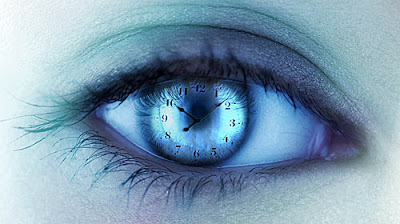
Wednesday, July 22, 2009

Humans Glow


Today I am uploading some photos and cutting andd pasting the text of 2 articles on light:
One about humans glowing, the other about "glow in the dark" stuff...how they work...

This is the article about humans emitting light.
(These are from yahoo site...and I know I will not be able to find this article tomorrow, so that is why I am saving it online.)
````````````````
Strange! Humans Glow in Visible Light
http://news.yahoo.com/s/livescience/20090722/sc_livescience/strangehumansglowinvisiblelight
Charles Q. Choi

Special to LiveScience
LiveScience.com charles Q. Choi
special To Livescience

livescience.com – 1 hr 54 mins ago

The human body literally glows, emitting a visible light in extremely small quantities at levels that rise and fall with the day, scientists now reveal.
Past research has shown that the body emits visible light, 1,000 times less intense than the levels to which our naked eyes are sensitive. In fact, virtually all living creatures emit very weak light, which is thought to be a byproduct of biochemical reactions involving free radicals.

(This visible light differs from the infrared radiation - an invisible form of light - that comes from body heat.)

To learn more about this faint visible light, scientists in Japan employed extraordinarily sensitive cameras capable of detecting single photons. Five healthy male volunteers in their 20s were placed bare-chested in front of the cameras in complete darkness in light-tight rooms for 20 minutes every three hours from 10 a.m. to 10 p.m. for three days.

The researchers found the body glow rose and fell over the day, with its lowest point at 10 a.m. and its peak at 4 p.m., dropping gradually after that. These findings suggest there is light emission linked to our body clocks, most likely due to how our metabolic rhythms fluctuate over the course of the day.

Faces glowed more than the rest of the body. This might be because faces are more tanned than the rest of the body, since they get more exposure to sunlight - the pigment behind skin color, melanin, has fluorescent components that could enhance the body's miniscule light production.

Since this faint light is linked with the body's metabolism, this finding suggests cameras that can spot the weak emissions could help spot medical conditions, said researcher Hitoshi Okamura, a circadian biologist at Kyoto University in Japan.
"If you can see the glimmer from the body's surface, you could see the whole body condition," said researcher Masaki Kobayashi, a biomedical photonics specialist at the Tohoku Institute of Technology in Sendai, Japan.

The scientists detailed their findings online July 16 in the journal PLoS ONE.
5 Myths About the Male Body
5 Myths About Women's Bodies
The Enduring Mysteries of Light

Original Story: Strange! Humans Glow in Visible Light
LiveScience.com chronicles the daily advances and innovations made in science and technology. We take on the misconceptions that often pop up around scientific discoveries and deliver short, provocative explanations with a certain wit and style. Check out our science videos, Trivia & Quizzes and Top 10s. Join our community to debate hot-button issues like stem cells, climate change and evolution. You can also sign up for free newsletters, register for RSS feed.

Tuesday, April 21, 2009

a new planet ?


AP – An artist's impression of 'Planet e' , forground left, released by the European Organisation for Astronomical …

Scientists discover a nearly Earth-sized planet
By JENNIFER QUINN, Associated Press Writer Jennifer Quinn, Associated Press Writer
18 mins ago April 20, 2009

HATFIELD, England – In the search for Earth-like planets, astronomers zeroed in Tuesday on two places that look awfully familiar to home. One is close to the right size. The other is in the right place. European researchers said they not only found the smallest exoplanet ever, called Gliese 581 e, but realized that a neighboring planet discovered earlier, Gliese 581 d, was in the prime habitable zone for potential life.

"The Holy Grail of current exoplanet research is the detection of a rocky, Earth-like planet in the 'habitable zone,'" said Michel Mayor, an astrophysicist at Geneva University in Switzerland.

An American expert called the discovery of the tiny planet "extraordinary."
Gliese 581 e is only 1.9 times the size of Earth — while previous planets found outside our solar system are closer to the size of massive Jupiter, which NASA says could swallow more than 1,000 Earths.

Gliese 581 e sits close to the nearest star, making it too hot to support life. Still, Mayor said its discovery in a solar system 20 1/2 light years away from Earth is a "good example that we are progressing in the detection of Earth-like planets."
Scientists also discovered that the orbit of planet Gliese 581 d, which was found in 2007, was located within the "habitable zone" — a region around a sun-like star that would allow water to be liquid on the planet's surface, Mayor said.

He spoke at a news conference Tuesday at the University of Hertfordshire during the European Week of Astronomy and Space Science.
Gliese 581 d is probably too large to be made only of rocky material, fellow astronomer and team member Stephane Udry said, adding it was possible the planet had a "large and deep" ocean.

"It is the first serious 'water-world' candidate," Udry said.
Mayor's main planet-hunting competitor, Geoff Marcy of the University of California, Berkeley, praised the find of Gliese 581 e as "the most exciting discovery" so far of exoplanets — planets outside our solar system.

"This discovery is absolutely extraordinary," Marcy told The Associated Press by e-mail, calling the discoveries a significant step in the search for Earth-like planets.

While Gliese 581 e is too hot for life "it shows that nature makes such small planets, probably in large numbers," Marcy commented. "Surely the galaxy contains tens of billions of planets like the small, Earth-mass one announced here."
Nearly 350 planets have been found outside our solar system, but so far nearly every one of them was found to be extremely unlikely to harbor life.

Most were too close or too far from their sun, making them too hot or too cold for life. Others were too big and likely to be uninhabitable gas giants like Jupiter. Those that are too small are highly difficult to detect in the first place.
Both Gliese 581 d and Gliese 581 e are located in constellation Libra and orbit around Gliese 581.

Like other planets circling that star — scientists have discovered four so far — Gliese 581 e was found using the European Southern Observatory's telescope in La Silla, Chile.
The telescope has a special instrument which splits light to find wobbles in different wavelengths. Those wobbles can reveal the existence of other worlds.
"It is great work and shows the potential of this detection method," said Lisa Kaltenegger, an astronomer at the Harvard-Smithsonian Center for Astrophysics.
___
Associated Press Science Writer Seth Borenstein contributed to this report from Washington

http://news.yahoo.com/s/ap/20090421/ap_on_sc/eu_britain_new_planet/print

Wednesday, April 15, 2009

KFC


I am simply fascinated by the success of Kentucky Fried Chicken and that the secret recipe is so secret and is kept in a vault and was recently relocated to another location;the guard carrying it had it in a metal box chained to his wrist. Lately, because of all the press about eating healthy...KFC is having a promotion for its grilled chicken and will give a free piece of grilled chicken away on April 27. Here is an article about KFC trying to add healthy items to its menu but still keeping the old unhealthy items...
By BRUCE SCHREINER, Associated Press Writer Bruce Schreiner, Associated Press Writer – Tue Apr 14, 6:09 pm EThttp://news.yahoo.com/s/ap/20090414/ap_on_bi_ge/kentucky_grilled_chicken

LOUISVILLE, Ky. – Would KGC ever have the same ring?
In a culinary gambit backed by buckets of big money, KFC is hoping to replicate its founder's recipe for success with the national introduction of Kentucky Grilled Chicken.

This week's rollout is KFC's most ambitious attempt to win over health-conscious customers as the chain known worldwide for fried chicken tries to reinvigorate lackluster U.S. sales.
"It's going to get people who haven't eaten KFC for a long time to come back into our restaurants," said KFC President Roger Eaton. "It's going to get people who have never eaten KFC to come into our restaurants."
Eaton says he spent years as part of the team tinkering with a grilled alternative, and the rollout follows KFC's longest market test ever. It will be backed by a marketing blitz.

Grilled chicken items are staples at some KFC competitors. McDonald's Corp. offers grilled chicken in sandwiches and wraps, and says chicken sales "continue to be extremely good." McDonald's has also recently been emphasizing its new Southern Style Crispy Chicken sandwich, which is fried. Chick-fil-A says its Chargrilled Chicken Sandwich "continues to grow rapidly" as part of a menu offering "balanced choices" for customers.

KFC's slow-grilled chicken drew strong reviews from the lunchtime crowd Monday at a KFC restaurant in Louisville, the chain's hometown. Eddie Collard proclaimed grilled better than fried.
"I think the colonel would be happy," Collard said of KFC founder Colonel Harland Sanders.

Like its predecessor, Kentucky Grilled Chicken has its own secret recipe. The original copy of the recipe — a blend of six herbs and spices — will be kept in an electronic safe at company headquarters. It will sit alongside Sanders' handwritten recipe of 11 herbs and spices coating the chain's Original Recipe fried chicken.
The difference is in the nutritional numbers.

KFC says each piece of its grilled chicken has 70 to 180 calories and four to nine grams of fat. By contrast, the Original Recipe items have between 110 and 370 calories and 7 to 21 grams of fat, depending on the piece. The grilled chicken contains from 160 to 440 milligrams of sodium per piece, as opposed to 290 to 1,050 milligrams of sodium per piece of Original Recipe chicken.

Michael Jacobson, executive director of the Center for Science in the Public Interest, a Washington-based advocate for nutrition and health, called the grilled introduction a "major step in the right direction."

While applauding the reduction in sodium, Jacobson said the 440 milligrams listed by KFC in a grilled chicken breast still amounts to more than one-fourth the amount that someone middle aged or older should consume daily.

KFC has launched non-fried chicken before, but each prior initiative flopped. In the early 1990s, it introduced a rotisserie-style chicken that fell by the wayside due to equipment problems and long cooking times. A tender roast product followed but lasted only a couple of years.

Eaton said the difference this time is partly in the cooking process. Chicken is cooked on grill racks in custom-designed ovens in a patented process that takes about 20 minutes per batch.

The grilled chicken rollout is offered only at KFC stores in the United States, though Eaton said the product may eventually expand to international markets.
KFC had 5,166 U.S. stores at the end of 2008. All but about 100 franchise stores are selling grilled chicken, the company said. Some stores couldn't fit the oven into their kitchens, and in other cases franchisees opted not to sell the product, the company said.

KFC won't say how much the ovens cost, but Eaton said the company helped franchisees with the expense and would have made such an investment only if it was "incredibly confident about the outcome."

Larry Miller, a restaurant analyst with RBC Capital Markets, said expanding beyond its fried staple offers a huge opportunity for KFC. But perceptions won't be easy to change.

"They still have the credibility barrier to overcome," Miller said. While achievable, "it's tough when your name has 'fried' in the middle."

In late 2008, Yum Brands Inc. Chairman and CEO David C. Novak said KFC had been a drag on the company's U.S. performance while sister brands Pizza Hut and Taco Bell had a good year.

Miller said this week that Yum would hit "the trifecta" if it turns around KFC's U.S. sales.

Mike Ash, who ate a grilled chicken lunch at the Louisville KFC, remembered the rotisserie chicken as "mushy and bland." He liked the new grilled offering, having picked it to the bone.

He said he might be more apt to pick up a bucket of chicken on his way home, though he predicted he might still "fall off the wagon every now and then" and choose the fried option.

The grilled chicken will cost the same as Original Recipe chicken. KFC will offer customers a free piece of grilled chicken on April 27.

But the push for grilled chicken doesn't mean KFC is abandoning its roots, Eaton said. The chain is testing new fried chicken products, and remains committed to its core product.

"It would be incredibly arrogant to think we could create a product that could supersede Original Recipe chicken," Eaton said. "But this product is easily good enough to sit alongside it."
___
AP Business Writer Lauren Shepherd in New York contributed to this report.

Tuesday, March 17, 2009

Melissa Healy~Health Reporter


This picture was in LA Times Health section March 9, 2009

here are 2 articles on the subject of interanl time keeping by Ms. Healy...

From the Los Angeles Times
Science of time: What makes our internal clock tick
Neuroscientists are exploring how brain and body make sense of our most ephemeral resource.
By Melissa Healy

March 9, 2009

In warp-speed modern America, time has become one of our most precious resources. We manage it, and we expend it carefully.

Ironic, then, that a resource as precious as seconds, minutes and hours is so poorly understood and so routinely misestimated by modern humans -- by 15% to 25% in either direction, depending on the individual and the acuity of his or her time perception. But understanding our ability to perceive time -- and to use time to make sense of our world -- is one of the newest and most sweeping frontiers of neuroscience.

Says UCLA neuroscientist Dean Buonomano: "In order to understand the nature of the human mind, we must unravel the mystery of how the brain tells time, in both normal and pathological states."

Against that backdrop, the temporally challenged have become more scientifically relevant than ever. Neuroscientists have come to recognize that patients with devastating brain disorders such as Parkinson's and Huntington's diseases greatly underestimate the passage of time. Poor timing is a hallmark in several psychiatric conditions, including schizophrenia, autism and attention deficit disorder. Many of about 5,500 soldiers returning from Iraq and Afghanistan with traumatic brain injury will find that faulty timing is one of the invisible wounds that follow them into civilian life. And researchers have confirmed that as we reach senior status, our internal clock grows increasingly unreliable.

But to treat these disorders and to understand how we sense time's passage, researchers say they must stand back and see the brain as a complex network of circuits, some interlocking, some whirring away independently.

This "network" approach to brain science "is a much more complicated problem" than asking what tasks are performed in individual regions of the brain, says Catalin Buhusi, a computer scientist-turned-brain scientist who now researches time perception at the Medical University of South Carolina.

Decisions, decisions

We use our grasp of long spans of time -- from hours to weeks -- to apportion our energies: Shall I surf the Internet aimlessly, or knuckle down and finish that report due tomorrow?

Rats rewarded on a regular time schedule will grow more attentive and motivated to learn as treat-time draws near, Buhusi notes. Students, he observes, show the same pattern, both in hourlong experimental situations and in their approach to the academic year: They tend to party and socialize for the first several weeks of a semester and, in the weeks before finals, grow ever more attentive to schoolwork.

This sense of time is probably evolution's way, Buhusi says, of ensuring we mete out our attention and energy efficiently, rather than expending too much too soon and falling short at the end. And it explains why open-ended challenges -- whether it is a mother-in-law's visit, a research paper with no deadline or imprisonment in Guantanamo -- can be deeply disorienting.

At the other end of the time spectrum is the elusive -- but tiny -- stretch of time we call "now."

For most people, researchers have come to define the optimal "now" -- give or take a second or two -- about 2 1/2 seconds long, basically a human's typical span of unconscious attention.

Those whose "now" interval is much shorter than 2 1/2 seconds are readily distracted and thus unlikely to stay on task long enough to make full sense of their surroundings and respond appropriately. If "now" is much longer than that, people's powers of attention may be too rigid to shift when necessary to keep up with changes in their surroundings.

The "now" interval may help explain why attention might be the most important -- and most fragile -- part of our internal clocks.

We see, move and react in tiny increments of this unconscious "now": Motorists make constant calculations of time to avoid collisions. Athletes use split-second estimates of time to connect with an incoming ball. Planting a kiss in the right place requires a precise coordination of movement and time estimation. The person with an off-kilter sense of the "now" will have problems with timing.

Time, interrupted

In a healthy human brain, researchers believe that every second we are conscious, a circuit involving three distinct regions of the brain -- the cerebellum, basal ganglia and prefrontal cortex -- is essentially checking and cross-checking incoming information and its time stamp. In real time, that circuit builds a logical sequence of events out of information coming from different sources at different speeds.

From our earliest days, this circuit helps us to infer relationships of cause and effect, to make sense of the world and to learn. A baby bats at a dangling toy clown, feels its soft covering hit her hand and, less than a second later, hears it jingle: By correctly perceiving the order of those events and the tiny space of time between them, she learns that her action caused the clown to swing and jingle. And in so doing, she learns she can do it again.

When this sense of time is disrupted -- as in several illnesses now under study -- the world can become a chaotic jumble of seemingly unrelated events, or of effects attributed to the wrong cause. Chronically taken by surprise in an illogical world, a patient with what's increasingly known as a "temporal disorder" might respond with irrational anger or fear. Or he may feel helpless to understand how his actions affect things and people around him, and lapse into apathy.

David Eagleman, a neuroscientist at Baylor College of Medicine in Texas, suggests that such dysfunctions of timing may underlie what he calls the "fragmented cognition of schizophrenia." Schizophrenic patients, Eagleman says, are recognized as having spotty powers of time estimation -- sometimes too fast, sometimes too slow.

Patients with traumatic brain injury, including thousands of service members who have suffered concussions from bomb blasts in Iraq and Afghanistan, may also yield important clues to the brain's timing mechanisms, and what happens when they're disrupted.

"These patients can see, move, hear; all their sensory systems are intact, but they can't interact" in expected ways, says Dr. Jamshid Ghajar, a Cornell University neurosurgeon and time-perception researcher who directs the Brain Trauma Foundation. "They regularly tell you, 'I feel out of sync.' They're telling you they can't synchronize when they're trying to interact."

In short, their timing is "off," possibly because their injury has affected the bundle of time they unconsciously define as "now."

Ghajar says that getting time right allows the healthy brain to project a few steps ahead of events happening around us, and to begin setting up to react even before it's necessary. Whether volleying a tennis ball, answering a question or responding to a gesture, this anticipation allows us to respond smoothly to our world. For many brain injury patients, such effortless interaction is subtly and painfully missing. These victims of brain injury may seem awkward, lazy, agitated or slow. But Ghajar thinks many of these patients have sustained damage somewhere in the brain's timing circuits.

The weak link

"You can explain a lot of pathologies," including schizophrenia, autism and ADHD, as problems of time perception, Ghajar says.

These patients may start with faulty perception at the level of a few seconds and below, he says. "But if things start going off-track within that time frame, they're going to stay off-track through longer spans of time."

That may be one explanation for what happens to Parkinson's and Huntington's disease patients.

These patients, whose neurological disorders progressively disrupt motor control, routinely misestimate the passage of time -- both at very short intervals and at spans lasting several minutes.

In both diseases, the brain chemical dopamine becomes progressively less available, or effective, in the basal ganglia's mid-brain neighborhood.

But give a Parkinson's patient his medicine, which mimics the effect of dopamine, "and his sense of time is restored dramatically -- within minutes," marvels brain scientist Buhusi.

Such bits of medical arcana suggest to some researchers that the basal ganglia might be the weak link in the internal clocks of these patients. But the weak link could as easily be flagging attention, others say. The Parkinson's drug L-Dopa also has the effect of goosing activity in these patients' prefrontal cortices, sharpening their attention.

"We've learned a lot from Parkinson's disease patients. But we clearly haven't got it all," Buhusi says.

As the link between time perception and health has grown more visible, the study of time is no longer the sole province of philosophers, physicists and poets.

"There is no National Time Institute," says Richard Ivry, a noted time-perception researcher at UC Berkeley. But as philanthropies and funders such as the National Institute of Mental Health and the Department of Veterans Affairs gain interest, time perception may cease to be what Ivry calls "the stepchild of the sensory system" that it has traditionally been in brain-science circles.

Time's time, in short, may be now.

http://www.latimes.com/news/science/la-he-time9-2009mar09,0,4437064,print.story


From the Los Angeles Times
Memory, emotions can trip up time perceptions
After the fact, people are prone to overestimating the duration of an exciting event.
By Melissa Healy

March 9, 2009

Distortions of time can be common in healthy brains too, especially when seen in the rearview mirror.

Perhaps our best-known aphorisms about time perception are "time flies when you're having fun," and "a watched pot never boils." But when memory and emotion enter the picture, one neuroscientist found, both presumed truths get turned on their heads. Seen in hindsight, time slows down when you're in a state of great excitement; and looking back on the boredom of pot-watching, the absence of emotional peaks makes an incident seem as if it passed in an instant, says David Eagleman, a neuroscientist at Baylor College of Medicine in Texas.

In a series of daring -- and, he acknowledges, fun -- experiments, Eagleman and fellow researchers had 20 subjects winched up to the top of a 46-meter-tall tower at Dallas' Zero Gravity amusement park and then plunged safely into a net 31 meters below.

Eagleman knew that when calm, subjects were pretty accurate at timing the descent from the tower: When asked to estimate the length of airtime their compatriots experienced, their sober assessment was close to the mark: 2 1/2 seconds.

But Eagleton knew that in the wake of experiencing an emotionally arousing event -- a car crash, for instance -- most humans wildly overestimate its duration. To understand how such a distorted perception might come about, Eagleman needed to explore two possibilities:

First, at the time we experience an exciting event, do our hyper-alert senses take in more detail? And does that cause us -- at the time of the event -- to overestimate its duration in order to fit our enriched perception?

Or -- a second possibility -- does the time distortion of an exciting event come only later, when we reconstruct its overwhelming sensations? To accommodate so many arousing memories, do we overestimate the time it took for an event to play out?

To test the first possibility, Eagleman and his colleagues strapped hand-held computers to subjects' wrists as they experienced the terror (or thrill) of free fall. By having the subjects respond to several prompts on their speedy way down, experimenters measured whether the aroused subjects were actually taking in more information as they plummeted.

Results showed they were not. Effectively, subjects were accurately marking time on the way down.

But even though time was being accurately recorded during the plunge, memory seemed to play tricks with it later. To fit in all those remembered sensations, subjects would have to believe that an event must have lasted longer than it did, Eagleman surmised.

After subjects plunged from the tower, they obliged Eagleman. Asked to estimate the duration of their descents later, most guessed way too high.

"Time is a construction of the brain, and the brain goes through a lot of trouble to edit and present this story to you of what's going on out there and how fast or slowly it happens," Eagleman says. "But what your brain's telling you [that] you see is not always what's out there. It's trying to put together the best, most useful story of what's happening out there in the world."

melissa.healy@latimes.comhttp://www.latimes.com/features/health/la-hew-timepassage9-2009mar09,0,3459915,print.storyhttp://www.latimes.com/features/health/la-hew-timepassage9-2009mar09,0,3459915,print.story

Monday, February 16, 2009

Chocolate for Breakfast book


This book is to be published tomorrow, Feb. 17, 2009

Here is an article about it from a Tulsa newspaper...
Chocolate for breakfast. Why not?
http://www.tulsaworld.com/lifestyle/article.aspx?subjectid=39&articleid=20090211_39_D3_Chocol58803

Chocolate-chocolate pancakes are found in "Chocolate for Breakfast."

By NATALIE MIKLES World Scene Writer
Published: 2/11/2009 2:21 AM
Last Modified: 2/13/2009 11:38 AM

It's definitely decadent, somewhat indulgent and just a little bit naughty.

It's "Chocolate for Breakfast."

And for author Barbara Passino, it's more than a catchy book title. At her Napa Valley bed and breakfast, the Oak Knoll Inn, every morning starts with chocolate for breakfast. Not just chocolate, mind you. But every breakfast has at least a little.

It's no wonder. Passino's mother tells her the first piece of solid food she ate was a chocolate brownie.

"I didn't stand a chance after that first brownie," she said.

When Passino opened the Oak Knoll Inn 17 years ago, she didn't set out to serve chocolate for breakfast. For a chocolate-lover like herself, it was just a natural thing to do.

"I didn't even realize it until one of my guests pointed it out to me. She said, 'This is the fifth day you've had chocolate on the menu.' Really?" she said.

By now it's tradition, whether in the form of chocolate crepes, chocolate tacos filled with fresh fruit, chocolate-filled toast pillows or a chocolate omelet with blueberries in a pinot noir sauce.

"People who come here are going to be going out and drinking wine around 11 in the morning, so it's good they have something good and solid for breakfast," she said.

Passino has no problem with your typical "chocolate for breakfast" fare — hot chocolate, chocolate-chip muffins, chocolate croissants. But it's the unexpected, like the chocolate omelet, that delights her guests. It's also the reason
she wrote the cookbook.

Guests asked so often for the recipes that Passino began writing them down, freely sharing them with guests and friends, letting them help her with the testing.

And Passino loves the idea that people can re-create the luxury of a Napa Valley inn wherever they live.

"During the week," she said, "you have your oatmeal or grab a bagel, but on the weekend, sitting down to a nice breakfast is a way to get the family together, to relax."

Yes, and to eat chocolate omelets.


Here are some reviews of it, plus a recipe from it:

Chocolate for Breakfast: The Cookbook, Oak Knoll Inn, Napa Valley
(Hardcover)

by Barbara Passino (Author), Antonia Allegra (Editor), Marc Hoberman (Photographer)

- 288 pages
-Publisher: Gerald & Marc Hoberman Collection (February 17, 2009)
-Language: English
- ISBN-10: 1919939555
- ISBN-13: 978-1919939551
-Product Dimensions: 9.6 x 8.7 x 1.3 inches
-Shipping Weight: 3.2 pounds

Product Description
With over 100 detailed recipes and 260 full color photographs, this lavishly illustrated cookbook is the ultimate tribute to the world's favorite indulgence. Chocolate connoisseur and chef extraordinaire Barbara Passino is renowned for her sinfully decadent breakfasts, which she serves daily at the luxurious Oak Knoll Inn, situated in the heart of Napa Valley, California. "Chocolate for Breakfast" is a sumptuous collection of Barbara's passion-filled techniques, philosophies and anecdotes, all presented in easy-to-follow recipes and illustrated with the spectacular photography of renowned photographer Marc Hoberman. Menus with a chocolate twist inspired from cultures around the world are presented, including Italian, French, Asian, Moroccan, Spanish and American, as well as some fun surprises such as breakfast ideas for Valentines Day, the secret to making a perfect bed (who says breakfast has to be at the table?), a Chocolate-y proposal and a lot more.

About the Author
Marc Hoberman is a photographer, designer, author and director of The Hoberman Collection, a publisher of luxury photographic coffee table books. From a young age he has travelled the world, camera in hand, capturing the striking images that have earned him his reputation. Commissioned by many prestigious organisations and publications including Vogue, Historic Royal Palaces and the Elton John Aids Foundation, he is also an official photographer for the British Academy of Film and Television Arts, working with many of the world's leading movie stars. Marc lives in London with his wife Sarah. Barbara Passino is the proprietor/chef of Oak Knoll Inn, a luxurious, intimate inn nestled amidst rows of grapevines in Napa Valley, California's Wine Country. Her decadent breakfasts have become the stuff of California legend and attract people 'in the know' from all over the world. Leaving behind 15 years in the world of finance, Barbara took a break from creating the mutual fund business at Charles Schwab and studied with master chef Marcella Hazan in Venice. Hungry for learning about other cultures through the way food is incorporated into daily life, Barbara combined travel with the study of cooking and was inspired to turn her passion into a full-time dream-come-true, in the heart of Napa Valley with her husband John. All of this culminated in the greatest breakfasts imaginable.

Serve these pancakes with a raspberry sauce or sliced strawberries.

CHOCOLATE-CHOCOLATE PANCAKES

1 2/3 cups flour
2/3 cup unsweetened cocoa powder
2 teaspoons baking powder
¼ teaspoon salt
1/3 cup granulated sugar
1 cup chocolate chips
2 eggs
2 teaspoons vanilla
5 tablespoons butter, melted and cooled
1 ¼ cup (plus up to ¼ cup more) milk

1. Put the flour, cocoa, baking powder, salt and sugar through a sieve placed over a large mixing bowl. Add the chocolate chips to the dry ingredients. Beat the eggs and vanilla together. Add melted butter, then milk and continue to blend. Pour the liquid mix over the dry ingredients, and stir thoroughly. It should be about the consistency of a really good chocolate milkshake.

2. Place a platter in the oven and turn the heat to 200 degrees. As you make the pancakes, put them on the platter so that they stay warm until you’re ready to serve.

3. Place a griddle or a large skillet over moderate heat and brush the surface with a little melted butter. Using a ladle, drop batter onto the griddle to make pancakes about 2 to 3 inches across. Cook until the edges begin to look dry and bubbles appear on the surface. Flip gently and cook for another minute on the other side.

Book- Brain Rules


from the book BRAIN RULES


The 12 Rules

Read the chapter, then use these tutorials to reinforce the concepts:

Explore each rule through illustrations, charts and video. These tutorials are designed to reinforce the concepts in the book; we recommend reading the corresponding
chapter first.

EXERCISE | Rule #1: Exercise boosts brain power.
SURVIVAL | Rule #2: The human brain evolved, too.
WIRING | Rule #3: Every brain is wired differently.
ATTENTION | Rule #4: We don't pay attention to boring things.
SHORT-TERM MEMORY | Rule #5: Repeat to remember.
LONG-TERM MEMORY | Rule #6: Remember to repeat.
SLEEP | Rule #7: Sleep well, think well.
STRESS | Rule #8: Stressed brains don't learn the same way.
SENSORY INTEGRATION | Rule #9: Stimulate more of the senses.
VISION | Rule #10: Vision trumps all other senses.
GENDER | Rule #11: Male and female brains are different.
EXPLORATION | Rule #12: We are powerful and natural explorers.

The Back of the Napkin


I discovered a book on amazon.com called "Back of the Napkin"...here is an illustration from it...so creative...there is a blog, and some inspiring stories and ideas here. Looks so good. OK..it is now on my wish list!